


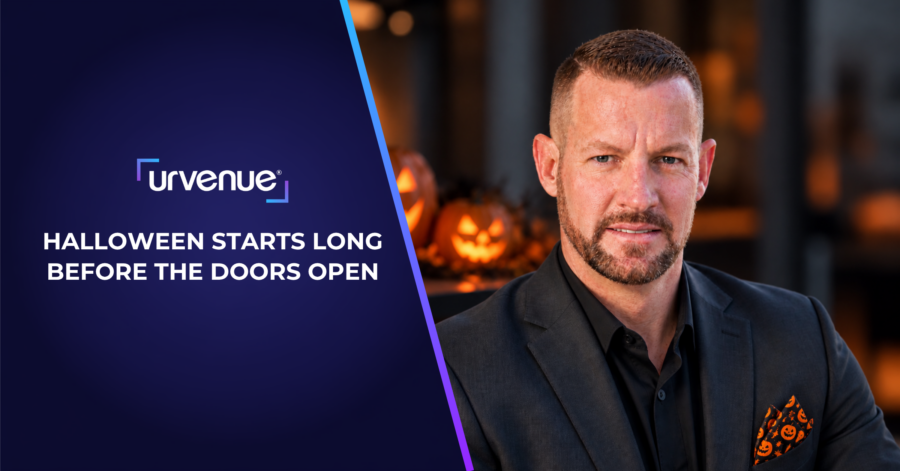
When Michael Sullivan built and owned a nightclub in South Florida in 2004, reservations lived on a laminated floor plan and a paper list. A dry-erase marker tracked the tables. Today, the tools are more sophisticated, but the responsibility is familiar: deliver the experience guests booked, even when the nightclub is at its busiest.
Sullivan brings that owner’s perspective to his work with UrVenue. Here, he shares five perspectives on turning Halloween’s anticipation into revenue, a well-run nightclub, and a night worth remembering.
What makes Halloween different from a regular nightclub night?
The guest’s investment starts before they book. They’ve chosen a costume, organized friends, and decided where to spend the evening. Some rarely go out, so this particular night carries real expectations.
Operators can build on that excitement. A celebrity host running a costume competition followed by a headline DJ gives people two reasons to attend. But the details have to support the promise. If the competition happens early, guests need to know when to arrive. The programming should build throughout the evening, giving people a reason to come early and stay.
How do you make the arrival live up to the anticipation?
The welcome is the first moment a guest finds out whether the experience matches the promise. You want them to feel expected.
That takes preparation. A host who knows the reservation can greet the guest by name, acknowledge a celebration, and understand the arrangements without asking the group to explain everything again. That knowledge should travel with them from the door to the table.
UrVenue’s reservation details and guest notes give the team information to make those moments personal. The minimum and deposit are accounted for; preferences and special requests are available for staff to review and act on.
Technology supports the preparation. The team delivers the warmth—and carries that attention through to the final thank-you as guests leave.
What does an interactive 3D map change about selling tables?
A table’s location is part of what the guest is buying. Someone celebrating a birthday may want to be beside the DJ. Another group may prefer a mezzanine overlooking the room, with enough distance to enjoy its own company.
UrVenue’s interactive 3D maps help guests see those differences, compare pricing, and choose from their phone or computer. They can understand where they’ll be before committing.
That helps the venue communicate the value of its different spaces and answers questions that would otherwise require several messages with the reservations team.
How should operators approach pricing as tables sell?
You need to understand both your inventory and the demand for it. Keeping every table at the same price throughout the booking period can leave revenue on the table.
Yielding allows an operator to configure increases as reservations are purchased. For example, ten VIP tables might start at $1,000 each, with the remaining inventory increasing by a set amount or percentage after each booking.
That gives the venue a way to respond to demand. Guests still need to understand the price, minimum spend, and inclusions before booking.
What information does the operator need once the doors open?
They need to see what’s happening while they’re in the room.
In a recent client discussion, we walked through receiving a reservation report at opening, then accessing the live floor plan on an iPhone. The operator can see reservations, table assignments, and minimums—and move a booking without returning to the host podium.
Customized reports can also arrive by email at scheduled times. The live map supports immediate decisions; the reports provide periodic snapshots.
That means fewer trips to find information and more time with the team and guests. That’s where you need to be on Halloween.
For nightlife operators, the best nights start long before the doors open. See how UrVenue helps venues manage inventory, pricing, reservations, and the guest experience from booking through the night itself.